
Categories
Central Washington, family, mental health, young adults, worklife balancePublished April 2, 2026
A Quiet Kind of Freedom

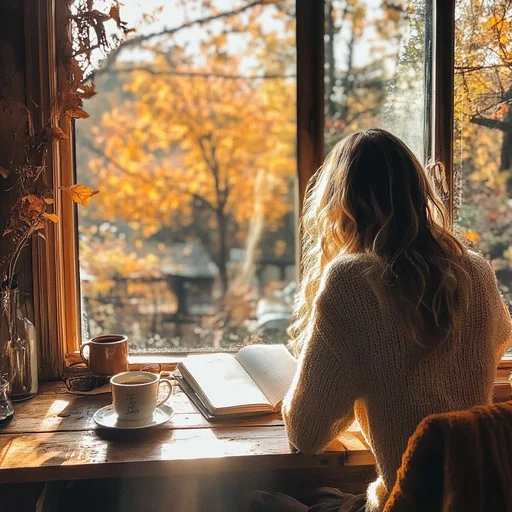
There’s a quiet kind of freedom that exists in your late 20s—a space that often gets drowned out by timelines, expectations, and the subtle panic of “Am I behind?”
Let’s be honest: this decade comes with noise. Engagement announcements. Career milestones. People buying homes, having babies, building lives that look, from the outside, complete. And if you’re single, it can feel like you missed a turn somewhere. Like everyone else got a map you didn’t.
But what if being single right now isn’t a delay?
What if it’s the main story?
Romanticizing your life isn’t about pretending everything is perfect. It’s about choosing to see your life as meaningful, rich, and worthy—exactly as it is. And being single in your late 20s? That’s not an empty space. It’s one of the most expansive, defining chapters you’ll ever have.
It’s waking up on a Saturday with no obligations and deciding, entirely on your own, what the day becomes. It’s last-minute trips, solo coffee dates, long walks where your only company is your thoughts slowly untangling themselves. It’s learning your own rhythms—what excites you, what drains you, what kind of life actually feels good instead of just looking good.
There’s something deeply romantic about becoming your own home.
You start to notice the small things more. The way your apartment feels when it’s exactly how you like it. The meals you cook just for yourself, not rushed, not compromised. The music you play too loudly. The routines you build that no one interrupts. You’re not waiting for someone else to join your life—you’re building a life that someone will have to meet.
And that shift matters.
Because being single in your late 20s isn’t just about independence—it’s about clarity. You’re no longer dating just to date. You’re not trying to prove anything. You’ve lived enough to know what doesn’t work, and you’re slowly getting braver about asking for what does. That kind of self-awareness? It doesn’t come from rushing into something. It comes from time. From space. From being alone long enough to hear yourself clearly.
There’s also a quiet confidence that grows here.
It shows up when you realize you can handle things on your own. When you navigate hard days without leaning on a partner. When you make decisions—big, scary, life-shaping ones—and trust yourself to figure them out. You stop seeing singleness as a gap to fill and start seeing it as proof: you are capable of building a full life by yourself.
And that changes how you love.
Because when you’re not desperate to escape loneliness, you stop settling. You stop shrinking. You stop accepting almosts and maybes and “good enough.” You begin to understand that a relationship should add to your life, not rescue it.
That’s the real power of this phase.
Of course, it’s not always easy. There are moments—the weddings, the holidays, the random Tuesday nights—where loneliness creeps in. Where you wish you had someone to share the small, ordinary parts of your day with. Romanticizing your life doesn’t mean ignoring that. It means holding both truths at once: yes, you can feel lonely sometimes, and yes, your life can still be beautiful, full, and deeply yours.
You are not behind.
Life isn’t a race with a universal finish line. It’s a collection of deeply personal timelines, shaped by choices, circumstances, and growth that no one else can replicate. Comparing yours to someone else’s will always make it feel like you’re losing—because you’re measuring completely different stories.
Right now, you’re in a chapter that is entirely yours.
You’re learning how to stand on your own. You’re figuring out what matters. You’re building standards, boundaries, and a sense of self that will shape every relationship you have going forward. That’s not falling behind—that’s laying a foundation.
So romanticize it.
Light the candle. Take yourself out to dinner. Book the trip. Rearrange your space. Start something new just because you can. Fall in love with the quiet, the independence, the becoming.
Because one day, your life may look different. It may include a partner, a family, a shared routine. And those things can be beautiful too.
But this version of your life—the one where it’s just you, becoming who you are—isn’t something to rush through.
It’s something to notice.
Something to appreciate.
Something, in its own way, to love.

Haley Larson
Owner/ Operator/ Designated Broker | RE/MAX | PLACE
or another way